Consider it for
- Shared desks serving older USB-A and newer USB-C computers
- DisplayLink office productivity setups
Check before buying
- USB-A supports at most two displays and no host charging.
- Third display requires native DP Alt Mode over USB-C.
- DisplayLink software required; triple setup HDMI is limited to 4K30.
USB-A access is useful, but it changes the maximum
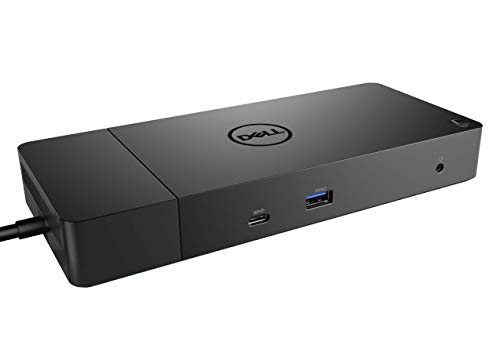
The included connector arrangement supports a USB-A host as well as USB-C. DisplayLink drives the USB graphics outputs, making this a possible way to reuse an older computer at a modern desk. On USB-A, Dell’s table stops at two displays. That connection also does not charge the laptop.
For three connected screens, a suitable USB-C host supplies the additional native Alt Mode video path. Dell lists two DisplayPort screens at 4K60 and HDMI at 4K30 in that arrangement. This distinction is essential for a Mac with restricted native external-display support: count the DisplayLink screens and native screen separately rather than treating all three as driver-generated outputs.
Check the exact configuration and included power supply.
Check on AmazonKeep office flexibility separate from graphics performance
The D6000S is most naturally considered for documents, browsers and ordinary office multitasking. DisplayLink requires compatible software, so a company-managed laptop needs the driver approved before the dock becomes useful. For graphics-sensitive applications, compare a native-video or Thunderbolt alternative rather than assuming every multimonitor technology behaves identically.
Laptop charging reaches up to 65W on an appropriate USB-C host. Four USB-A ports, one front USB-C data connection and Gigabit Ethernet can anchor everyday peripherals, but the USB-C accessory port is not an extra video connector. Write down which cable connects the host before troubleshooting or buying; using the USB-A adapter explains several otherwise confusing limitations.
Connections & compatibility
- Connection to laptop
- USB-C or USB-A via supplied converter
- Display technology
- USB graphics / DisplayLink
- Maximum displays (conditions apply)
- 3 displays maximum
- Power to laptop (W)
- 65W published host power
- HDMI sockets
- 1
- DisplayPort sockets
- 2
- Wired network
- Gigabit Ethernet
- USB peripherals
- 4 USB-A plus 1 USB-C data port, 5Gbps
- Display requirements
- Dual 4K60 via DisplayLink; third HDMI 4K30 requires native USB-C Alt Mode
- Mac notes
- Requires compatible DisplayLink software; native third-screen limit remains
- Windows notes
- DisplayLink installation required
These are published specifications, not results from hands-on testing. Maximum screen counts depend on the laptop, operating system, connection and chosen resolution.
Check your setup requirementsSources & specifications
Research checked September 11, 2026. Product revisions, firmware and operating systems can change compatibility.
Review the current listing
Confirm model, condition, seller, included cables and power supply before ordering.
Check on AmazonAs an Amazon Associate I earn from qualifying purchases. How our links work.