Keep a one-day cable diary
Before browsing products, count what happens during an ordinary workday. Do you unplug a monitor to take the laptop to a meeting? Hunt for the webcam cable afterward? Move a charger between rooms? Write down those interruptions. A dock is a strong candidate when the same connections need rebuilding repeatedly.
Now note the problems that have nothing to do with connections. Slow spreadsheet calculations, insufficient storage space or a poorly positioned monitor need their own diagnosis. Do not assign those frustrations to a dock's benefit column unless you can identify a documented feature that addresses them.
This need not become a spreadsheet project. Four lines are enough: the current inconvenience, how often it happens, what would remove it and the cost of that change. If you cannot complete the first two lines, delay the purchase.
Price three plausible solutions
Start with keeping the equipment you have. Cable clips, a better route behind the monitor or a dedicated charging location may remove most of the nuisance. This is your baseline, even if the layout is not as tidy as a product photograph.
Next price the smallest missing connection. If the computer already runs the display and only needs another USB port, compare a suitable hub or adapter. Belkin's 5-in-1 product illustrates a compact combination of video, card slots and USB connections; its exact suitability still depends on the computer and intended devices. Belkin 5-in-1 hub
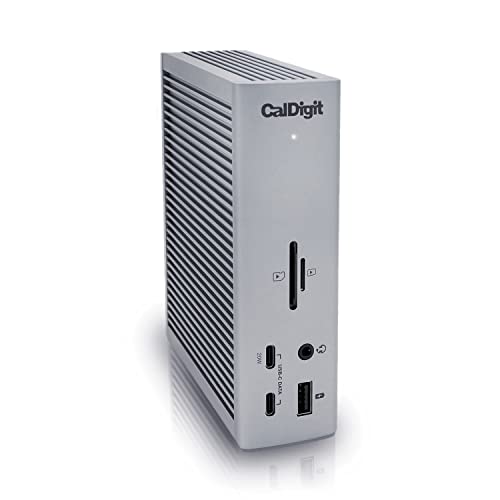
Finally price a complete docking setup. Include any missing power supply, host cable and display adapters. Subtract only purchases you truly avoid. Do not count a promised future monitor, Ethernet upgrade or accessory as an immediate saving. A package that looks expensive can still be reasonable if it replaces several confirmed purchases; an inexpensive box can be poor value if important parts are absent.
Need to compare actual models while you read?
See relevant dock optionsWhere a desktop dock has a clear job
A hybrid worker with a fixed collection of peripherals at home has a straightforward use case: leave the desk connected and bring the computer to it. A photographer who repeatedly reaches for removable storage may care as much about accessible ports as connection count. A shared household desk needs extra attention to each user's computer, rather than an assumption that one successful pairing establishes universal compatibility.
StarTech separates docking products aimed at mixed-computer compatibility from those intended for demanding native-video workloads. That distinction is worth investigating when a dock is for paid work: first decide what applications and computers it must serve, then evaluate the appropriate models. StarTech docking guide
The case for waiting
Hold off when your current arrangement works, when a laptop replacement is imminent but undecided, or when the candidate dock's compatibility remains unclear. Spending now to solve a hypothetical future setup can leave you with a device selected for neither computer particularly well.
If you do order, decide what success looks like before the return period begins. Test your actual meeting equipment, your normal displays and the unplug-and-return routine. Keep the packaging until those checks are complete. The point is to verify the convenience you paid for, not to persuade yourself that every available port must eventually become useful.
A dock earns its place when you can point to a task it simplifies each day and a setup it supports reliably. That may justify a substantial desktop package for one person and a small adapter for another.
Related questions
Do I need a docking station if my laptop stays on the desk?
Only if it supplies useful missing connections or improves a cable arrangement that bothers you. Frequent undocking is one benefit, not a requirement.
Should I buy the dock with the most ports?
Choose enough appropriate ports for your real equipment, with room for a specific planned addition. Unused connectors do not automatically add value.
Sources & specifications
Research checked September 11, 2026. Product revisions, firmware and operating systems can change compatibility.